Beállítások
 Gyors kiszállítás
 Ingyen kiszállítjuk
 Incoterms
 Fizetési módok


 Marketplace termék

Dielectric Elastomer Switches: Building Logic Gates with Soft Membranes
2026-04-08 | By Mario De Lorenzo
When you think of "electronics," you probably picture rigid green circuit boards, silicon chips, and soldering irons. But what if you could build a circuit entirely out of soft, stretchy rubber? Imagine robots that don't just move like muscles but also "think" using the same soft materials. This isn't science fiction! It is the world of Dielectric Elastomer Switches (DES).
Dielectric elastomers (DEs) are often called "artificial muscles" because they expand and contract when you apply voltage. While makers have used them as actuators for years, recent breakthroughs allow us to use them as switches and logic gates, paving the way for entirely soft, autonomous robots. To learn more about how to make soft actuators, read my previous article here.
What is a Dielectric Elastomer Switch?
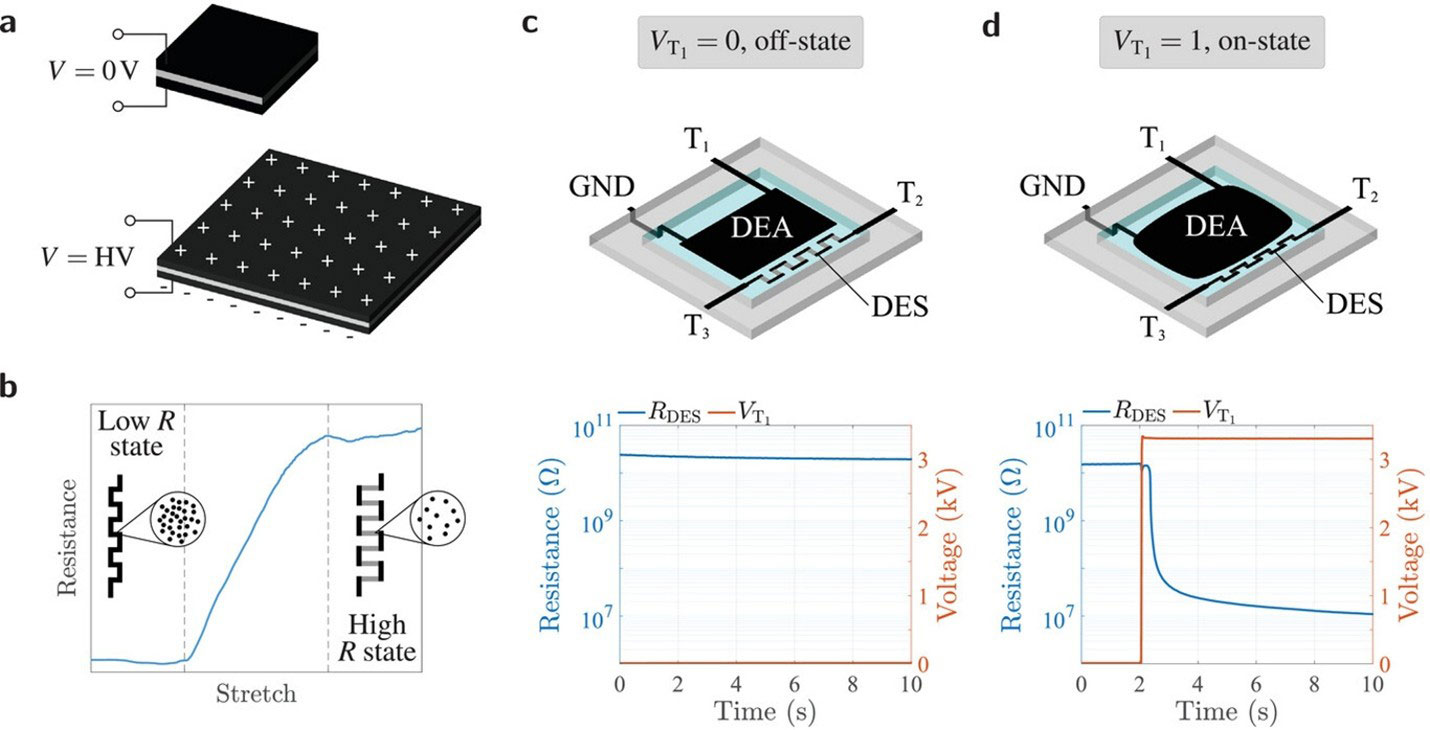
A Dielectric Elastomer Switch (DES) is a variable resistor made from soft materials that changes its electrical resistance when it is stretched or compressed.
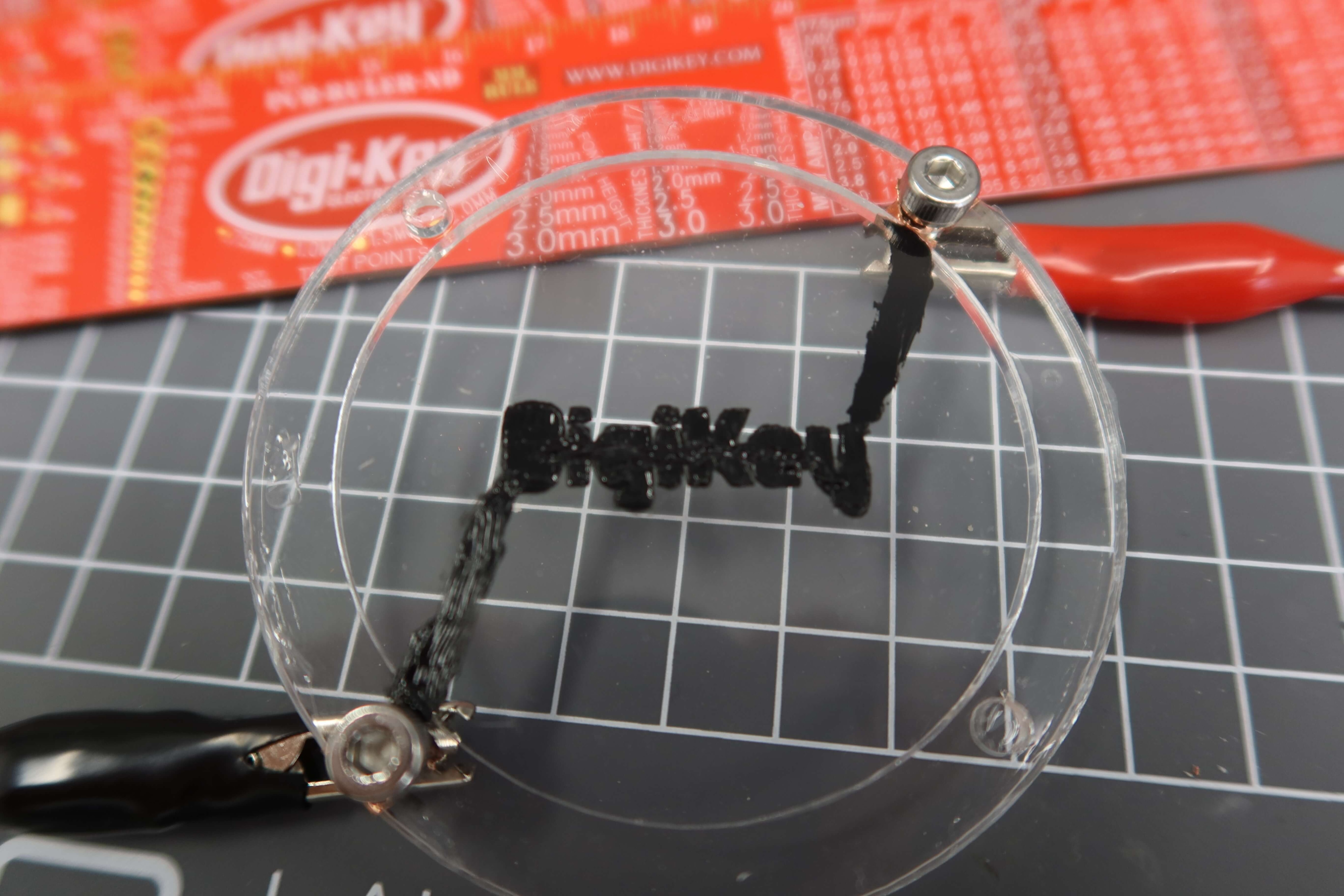
Instead of silicon, these switches use a piezoresistive ink (often a mix of carbon black and grease) painted or printed onto a stretchable acrylic tape (like VHB tape).
How Does It Work?
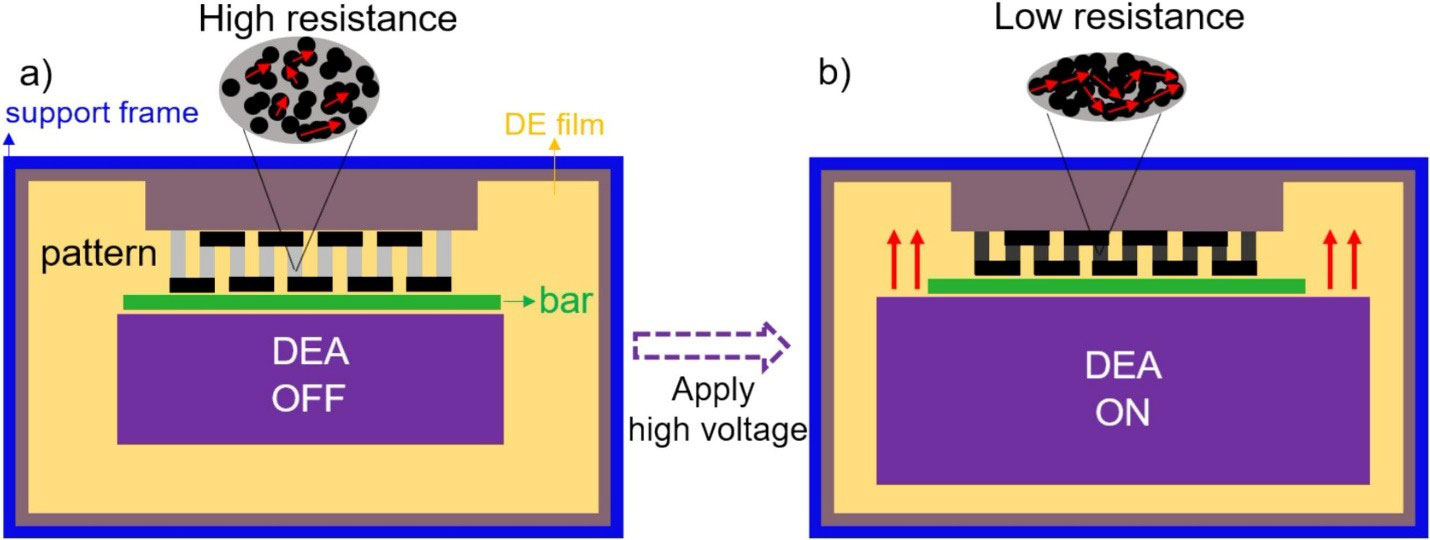
The magic behind the switch is simple physics. The conductive ink contains millions of tiny carbon particles.
OFF State: When the material is relaxed (or stretched, depending on the design), the carbon particles are pulled apart. Electricity cannot easily jump between them, creating very high electrical resistance.
ON State: When the material is compressed (often by an expanding dielectric elastomer actuator next to it), the particles are squished closer together. This creates a path for the current to flow, dropping the resistance by several orders of magnitude.
By combining an actuator (DEA) and a switch (DES), you create a Dielectric Elastomer Transistor (DET). Just like a silicon transistor, this allows one small signal to control a larger one, enabling you to build logic gates like NAND, NOR, and NOT purely out of rubber.
Why Do We Care?
You might wonder why we need rubber switches when microcontrollers are so cheap. The answer lies in soft robotics.
If you build a soft, octopus-like robot but have to stuff a hard Arduino and battery pack inside, you lose the benefits of being soft. Hard components create stress points where the robot can break. By using dielectric elastomer switches, you can process information directly in the material itself.
This technology allows for:
- Autonomous Reflexes: A robot can sense its environment and react without a central computer.
- Durability: No rigid parts to shatter or disconnect.
- Simplicity: Complex behaviors can emerge from the material's structure rather than complex code.
The Soft Venus Flytrap
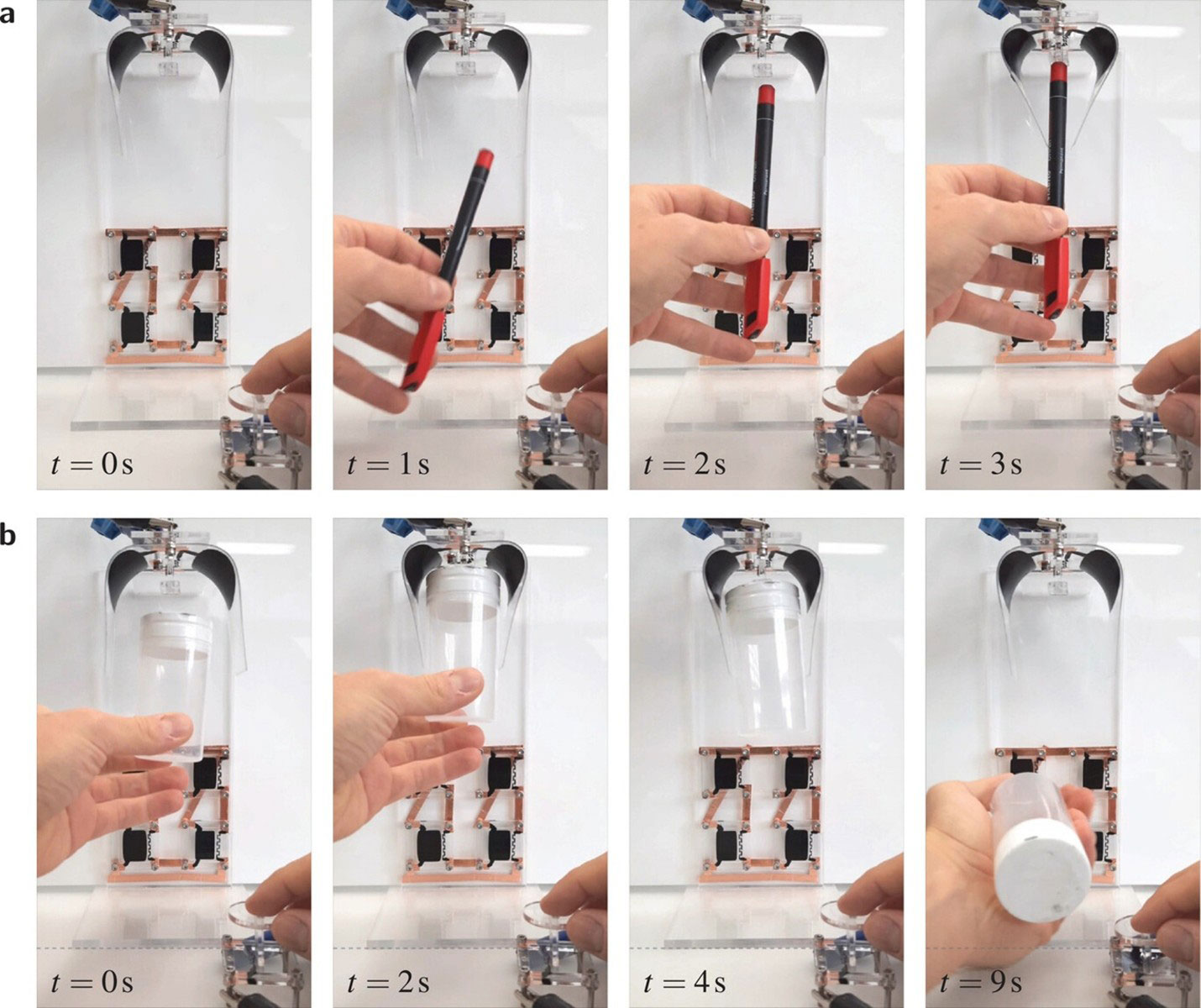
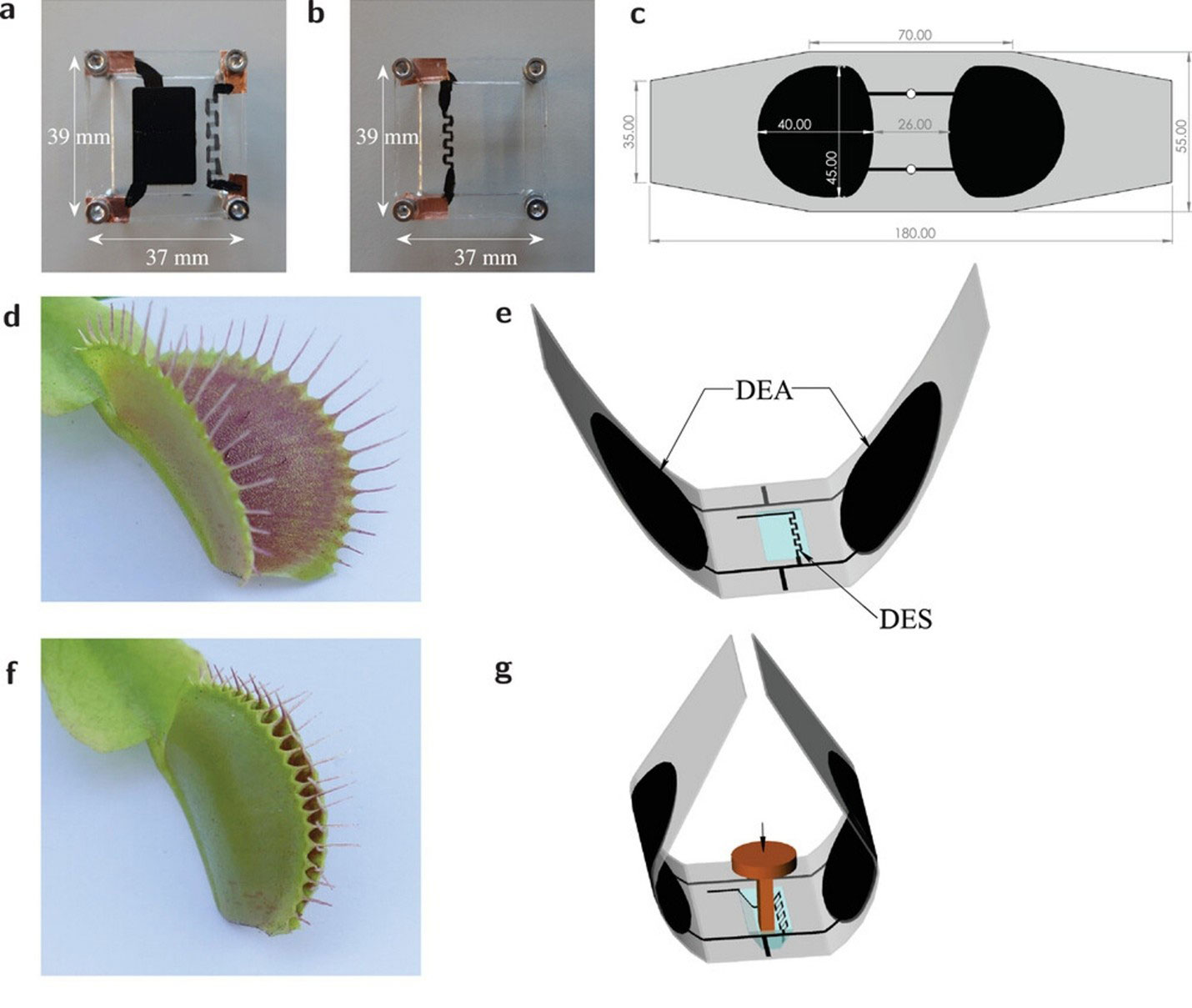
To see this in action, look at the "Venus flytrap" gripper developed by researchers. This device uses a simple latch circuit made entirely of dielectric elastomers to mimic the plant's reflex.
Here is how it functions:
- The Trigger: A sensor (DES) is embedded inside the open gripper.
- The Reflex: When an object touches the sensor, it stretches, changing its resistance.
- The Memory: This signal triggers a "latch" (a memory circuit made of soft DETs), which snaps the gripper shut.
- The Grip: The gripper stays closed, holding the object indefinitely until a reset signal is sent.
The amazing part is that this requires no microcontroller, just a constant voltage supply. The "brain" is the smart ink that changes in resistance value when strain is applied.
Fabrication for Makers
While this technology originated in high-tech labs, the materials are accessible. The base is often VHB tape (a strong double-sided tape), and the electrodes can be made from carbon grease or inkjet-printed carbon black.
If you have access to a laser cutter for frames and some patience for pre-stretching the tape, you can start experimenting with these "smart" materials. Recent advances in inkjet printing have made these patterns more reliable and easier to produce than the older hand-painted methods.
Future Outlook
Dielectric elastomer switches represent a shift away from thinking of materials as just "structure" and electronics as just "control." By merging the two, we can build soft robots that are smarter, more resilient, and closer to biological life than ever before. Whether you are building a soft gripper or just curious about non-silicon computing, these rubber switches offer a fascinating new tool for your maker toolkit.
Reference
- Yi, J., Ciarella, L., Rosset, S., Wilson, K., Anderson, I., Richter, A., & Vorrath, E.F.M. (2024). A piezoresistive dielectric elastomer switch consisting of inkjet-printed carbon black. Chemical Engineering Journal.
- Ciarella, L., Richter, A., & Henke, E.-F. M. (2023). Integrated Logic for Dielectric Elastomers: Replicating the Reflex of the Venus Flytrap. Advanced Materials Technologies.
- Ciarella, L., Wilson, K. E., Richter, A., Anderson, I. A., & Henke, E.-F. M. (2022). A model for dielectric elastomer based electronics. IFAC PapersOnLine.
- Ciarella, L., et al. (2021). Modelling dielectric elastomer circuit networks for soft biomimetics. Bioinspiration & Biomimetics.