A szállítási helytől függően a rendeléseket Magyarország általában 3 napon belül kiszállítjuk.
Ingyenes szállítás Magyarország 15 000 Ft vagy annál nagyobb megrendelések esetén. Minden 15 000 Ftnál kisebb megrendelés esetén 6 000 Ft szállítási költséget számolunk fel.
UPS szállítmány előre fizetve: DDP (a vám és a vámkezelés költsége a DigiKey-t terheli)
FedEx- vagy DHL-szállítmány előre fizetve: CPT (kézbesítéskor fizetendő vám, vámkezelési költség és ÁFA)
Hitelszámla arra feljogosított intézmények és vállalatok számára
Előre fizetés átutalással
![]()
![]()
![]()
![]()


További termékek teljes mértékben felhatalmazott parterektől
Az átlagos szállítási idő 1-3 nap, plusz szállítási költségek merülhetnek fel. A tényleges kiszállítási idő látható a termékoldalon, a kosárban és a pénztárnál.
Incoterms: CPT (kézbesítéskor fizetendő vám, vámkezelési költség és vonatkozó adók)
További információkért látogasson el Ügyfélszolgálat és súgó oldalunkra.
Build a low-latency XRP robot control system using ESPHome and a UART WiFi bridge. Stream sensors, control motion, and integrate with Home Assistant.
Discover how the XRP robot brings affordable robotics and AI education to classrooms with scalable curriculum and EDU discounts.
Combine LiDAR sensing and game controller input to create an XRP robot that navigates safely while providing haptic feedback alerts.
In this tutorial, we’ll demonstrate how to set up a communication channel between a ROS 2 node running on a Raspberry Pi and an Arduino-compatible microcontroller to control a simple robot.
In this tutorial, we take the next step and create a complete system using both TF2 broadcasters and listeners.
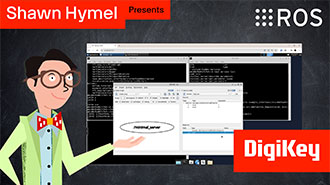
In this tutorial, we begin working with TF2, the ROS 2 library that handles coordinate transformations.
In this tutorial, we’ll explore how ROS 2 launch files simplify node orchestration.
In this tutorial, we'll explore how to use parameters in ROS 2 to dynamically configure nodes.
In this episode, we’ll go one step further by creating and using custom interfaces in both Python and C++. You’ll learn how to define your own message and service types and use them in publisher/subscriber and client/server architectures.
In this tutorial, we will see how services work by creating a custom server and client in C++ ROS nodes.
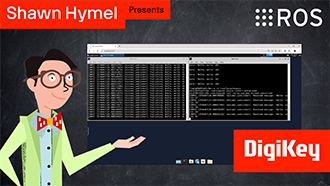
In this tutorial, we will see how services work by creating a custom server and client in Python ROS nodes.
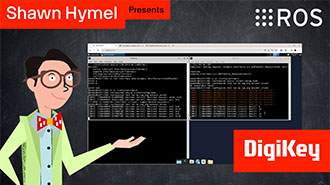
In this tutorial, we’ll walk through how to write ROS 2 nodes in C++ that communicate using the publish/subscribe model.
Köszönjük!
Figyelje bejövő levelei között a DigiKey újdonságait és frissítéseit!
Adjon meg egy e-mail-címet
Jelölje be a jelölőnégyzetet